Middle East & North Africa in 1949
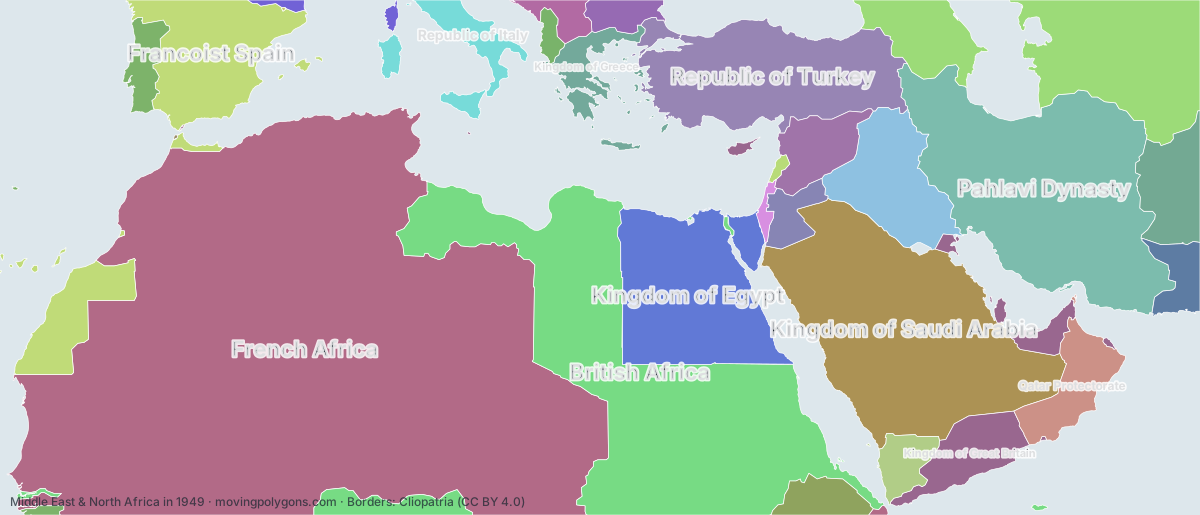
1949 is the year NATO and the two German states were founded. This map shows the 28 states and peoples the data has for Middle East & North Africa in that year.
Watch these borders move
Play the changes on an animated map, in your browser. Free, no account needed.
States and peoples in Middle East & North Africa in 1949
Largest first, by area on this map.
- French Africa
- British Africa
- Kingdom of Saudi Arabia
- Pahlavi Dynasty
- Union of Soviet Socialist Republics
- Kingdom of Egypt
- Republic of Turkey
- Francoist Spain
- Kingdom of Iraq
- Kingdom of Great Britain
- Qatar Protectorate
- Kingdom of Afghanistan
- Second Syrian Republic
- Republic of Italy
- Ethiopia
- Kingdom of Greece
- North Yemen
- Islamic Republic of Pakistan
- Estado Novo
- Kingdom of Jordan
- People's Republic of Bulgaria
- Socialist Federal Republic of Yugoslavia
- People's Socialist Republic of Albania
- French Fourth Republic
- State of Israel
- Lebanon
- Tangier International Zone
- Principality of Andorra
New on the map since 1924
Kingdom of Saudi Arabia · Francoist Spain · Kingdom of Iraq · Qatar Protectorate · Kingdom of Afghanistan · Second Syrian Republic · Republic of Italy · Ethiopia · Kingdom of Greece · Islamic Republic of Pakistan · Estado Novo · Kingdom of Jordan · People's Republic of Bulgaria · Socialist Federal Republic of Yugoslavia · People's Socialist Republic of Albania · French Fourth Republic · State of Israel · Lebanon
Gone from the map by 1974
French Africa · British Africa · Kingdom of Egypt · Kingdom of Iraq · Qatar Protectorate · Kingdom of Afghanistan · Second Syrian Republic · Kingdom of Greece · French Fourth Republic · Tangier International Zone
Animated maps of this time
Middle East & North Africa in other years
Other regions in 1949
The outlines are coarse and follow the Cliopatria dataset: borders before modern surveys are estimates, and a blank area means the data has no state on record there, not that nobody lived there. A state that changed hands during the year can appear together with its successor.