Animated maps of language and belief
These maps follow what people speak and what they believe. One shows the everyday language of every part of the world from 100 BC to today, another the dialects of Dutch and German since the year 800. Others follow Christianity and its branches from about AD 30, the gift-bringers that grew out of the cult of Nicholas of Myra, and the switch to the Gregorian calendar.
Land takes the colour of a language, a church or a custom, and keeps it until something else takes over.
5 maps
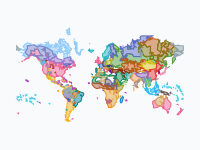
What the World Spoke: Languages from 100 BC to Today
What did people speak, and where? This map follows the main everyday language of each part of the world from 100 BC to today. Latin spreads with Rome and breaks up into French, Spanish, Portuguese and Italian.
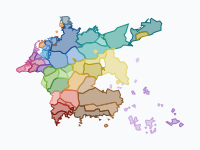
The Dialects of Dutch and German, 800 to 2020
Where was which kind of Dutch, Frisian and German spoken, and since when? This map follows the everyday speech of the countryside between Dunkirk and Königsberg from 800 to 2020.
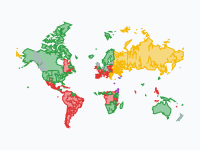
Spread of Christianity, 30–2025
How Christianity spread from a small Jewish movement in Jerusalem across the world, and which branch prevailed where. From c. AD 30 to 2025.
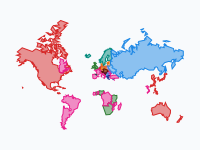
Sinterklaas to Santa: the bearded gift-bringers, 343–2026
Who brings the presents? One 4th-century bishop, Nicholas of Myra, and what Europe and then the world made of him. The pale ochre wash is the saint's cult, spreading from Lycia through Byzantium, to Bari (1087) and…
Read the article: From Sinterklaas to Santa Claus, 343–2026: An Animated Map of the Gift-Bringers
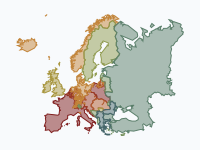
When Europe switched to the Gregorian calendar, 1582–1923
In October 1582 Catholic Europe skipped ten days. The rest of the continent took 340 years to follow: province by province and city by city, with some places switching back to the Julian calendar for a while.
Make your own animated map
Pick a region and two years, and watch the borders of that time move. You need no account to try it.
Create a map