Ten Days That Never Happened
In Rome, Madrid, Lisbon and the Polish Crown, Thursday 4 October 1582 was followed by Friday 15 October. Greece did the same thing, with thirteen days instead of ten, on 1 March 1923. For the 341 years in between Europe ran on two calendars at once: between 1583 and 1700 a traveller could leave a Catholic town in Germany on Christmas Day and reach a Lutheran one where it was still ten days before Christmas.
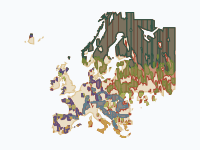
The map colours every place by the day its civil calendar became Gregorian, from the deep red of 1582 to the grey-green of the Orthodox east after the First World War. Protestant rulers would not take their calendar from Rome, a calendar changed (sometimes backwards) when the ruler changed, and the Orthodox churches never accepted the reform at all. Hence a Protestant calendar that disagreed with the pope only about Easter, a Swedish February with thirty days, and Lithuania, which had the new calendar for 217 years and then lost it.
A Pope's Repair Job
Julius Caesar's calendar gives every fourth year a leap day, an average year of 365.25 days. The solar year is about eleven minutes shorter, so the calendar drifts ahead of the seasons by a day every 128 years or so. That mattered to the Church because Easter is reckoned from the spring equinox, taken since the Council of Nicaea (325) to fall on 21 March. By the sixteenth century the real equinox came around 11 March.
The reform, worked out by Aloysius Lilius and Christopher Clavius, removed ten dates once, and from then on three leap days in every 400 years: a century year is a leap year only if it divides by 400, so 1700, 1800 and 1900 lost their 29 February and the gap grew to eleven, twelve and thirteen days. Gregory XIII signed the bull Inter gravissimas at Frascati on 24 February 1582 (6 March in the new style). A bull, though, bound only the Church and the Papal States; every country needed its own ruler to decree the change.
Catholic Europe Follows, Protestant Europe Refuses
Spain, Portugal, most of Italy and Poland–Lithuania switched on the day the bull set. France followed on 20 December 1582, and even rebel Holland and Zeeland switched that winter. The Catholic princes of the Empire came between October 1583 and January 1584 (Austria, Bavaria, the Rhineland archbishops, Bohemia), Hungary in 1587 and Transylvania in 1590. On the map this is the patchwork of red and red-brown across Germany, where Catholic bishoprics and Lutheran duchies lay side by side.
The Protestant states refused, and the argument was about authority more than astronomy. In England the bishops called the pope the beast of Daniel, and Elizabeth let the matter drop. In mixed cities it came to blows: in Augsburg in June 1584 a crowd freed a Lutheran preacher who had told his flock to keep Ascension by the old calendar, and Polish-ruled Riga rioted from Christmas 1584 until 1589, when it was allowed to keep the old style. The shared death date of Cervantes and Shakespeare, 23 April 1616, hides a gap of ten days: Shakespeare's Julian 23 April was 3 May in Madrid.
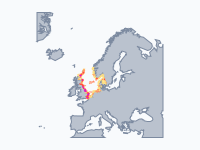
Protestant Germany gave in only in 1700, on its own terms. After a vote of the Protestant estates at the Diet in Regensburg, Sunday 18 February 1700 was followed by Monday 1 March across Protestant Germany, Denmark and Norway. They called it the Improved Calendar: Gregorian dates, but an Easter worked out from Kepler's Rudolphine Tables, so in 1724 the two halves of Germany kept Easter a week apart (9 and 16 April), and again in 1744. On 13 December 1775, at the request of Frederick the Great, the Protestant estates accepted the Gregorian Easter too, under the name Improved Imperial Calendar, which spared them the pope's name. In Graubünden, where every commune decided for itself, Schiers and Grüsch were fined for still refusing in 1812.
Sweden's 30 February and Britain's Eleven Days
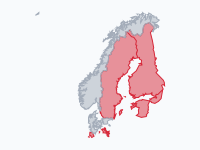
Sweden tried to be clever. In 1699 it decided to leave out every leap day from 1700 to 1740 and slide into step without losing a block of days. It dropped 29 February 1700, and from then on Swedish dates were one day ahead of the Julian calendar and ten behind the Gregorian: the grey area on the map, which reached Estonia and Livonia in April, when ships could cross again. Then came the Great Northern War, the leap days of 1704 and 1708 were kept after all, and in 1711 Charles XII, in exile at Bender, ordered a return to the Julian calendar. To get there, February 1712 had 30 days. Ingria (1703), Estonia and Livonia (1710) had by then gone Julian under Russia.
Britain switched first. The Calendar (New Style) Act of 1750 moved New Year from 25 March to 1 January, so 1751 was a short year, and in 1752 Wednesday 2 September was followed by Thursday 14 September in Britain, Ireland and the colonies. The crowds who supposedly rioted for their eleven days are a legend: the cry was a Tory jibe in the Oxfordshire election of 1754, kept alive by Hogarth's placard in An Election Entertainment. The skipped days did reach the money: the British tax year still starts on 6 April, the old quarter day of 25 March moved on. Sweden and Finland followed on 1 March 1753, after Wednesday 17 February.
Switching Back
A calendar showed who ruled, and when the ruler changed it could change back. The city of Groningen took the new style in 1583 under the royalists; after Maurice of Nassau captured it for the Dutch Republic, Saturday 19 November 1594 was followed by Sunday 10 November, and the city switched again only in 1701. Protestant Appenzell Ausserrhoden went back when the canton split in 1597, and Livonia when Sweden conquered it in 1625.
The longest reversals were Russian. Courland, a Polish fief, had used the Gregorian calendar since 1617; after Russia annexed it, Catherine II had 7 February 1796 followed by 28 January. Lithuania, Gregorian with the rest of the Commonwealth since 1582, lost the new calendar when Paul I restored the Julian one from 1 January 1800 (old style), and got it back from the German occupation on 28 November 1915. The map also turns the Belarusian and Ukrainian lands of the partitions of 1772, 1793 and 1795 back to Julian at annexation, an assumption, since only Lithuania's date is documented.
The Orthodox East: War, Revolution and the Church
Further east the Orthodox churches had not been consulted, Russia and the Balkan states kept the Julian calendar for civil life too, and the Ottoman Empire kept its own calendars. Gregorian dates came east with new rulers: the Habsburgs in the Banat, Bukovina and Bosnia, Britain in Cyprus. Then the First World War did in a few years what three centuries had not. Bulgaria, fighting alongside Germany, went first: 31 March 1916 was followed by 14 April. The Ottoman Empire moved its days and months on 1 March 1917. The Bolsheviks took power on 25 October 1917, 7 November in Berlin, and in 1918 their government had 31 January followed by 14 February. Ukraine, Transcaucasia, the new Kingdom of Serbs, Croats and Slovenes and Romania followed by April 1919, and Greece came last: Wednesday 15 February 1923 was followed by Thursday 1 March.
The churches went their own way. In May 1923 a congress in Constantinople proposed a Revised Julian calendar that matches the Gregorian one until 2800. The Church of Greece took it in March 1924 but still reckons Easter the old way. The Russian, Serbian, Georgian and Jerusalem churches kept the Julian calendar for everything, which is why their Christmas, 25 December by their reckoning, falls on 7 January; the Orthodox Church of Ukraine moved to the revised calendar only in 2023.
How to Read the Map
Each colour is a wave of switches: deep red for 1582, red-brown for the Catholic German lands of 1583–1584, burnt orange for the later adopters up to 1699, ochre for the Protestant states of 1700–1701, mustard for 1702–1752 (Great Britain among them), olive for Sweden and Finland in 1753, sage green for the stragglers up to 1915, and two darker grey-greens for the Orthodox east, 1916–1918 and 1919–1923. Blue-grey is Sweden's own calendar of 1700–1712; land with no colour still counts in Julian (or Ottoman) dates. Watch the grey Swedish realm spreading in 1700 and shrinking in 1703, 1710 and 1712, and the whole east turning between 1916 and 1923.
A switch happened overnight, so on the map it takes one short step: the keyframe before it is the last day of the old calendar ('13 Sep 1752 · Britain's last Julian day'), the next is the first day of the new, all in new-style dates. Where the sources give only a year, the step falls at the turn of that year. Pins tell the stories, from the bull to the October Revolution; two small dots mark the Riga riots and the Protestant vote on Easter.
How the Map Was Made
The map follows civil use, not church use. Its dates come from 272 research areas, from Grotefend's Taschenbuch der Zeitrechnung (1941), the Oxford Companion to the Year, the Historical Dictionary of Switzerland, Szulc (2011) on Poland–Lithuania, Scheutz on the Habsburg lands, Jürgen Beyer on the Swedish calendar and Robert Poole on the eleven-days myth, with Wikipedia's list of adoption dates as a baseline that loses wherever they disagree. Central Europe is drawn in small modern districts that follow the ruler of the day, from this site's Holy Roman Empire map, the rest in modern provinces and countries, so borders are approximate. A change of ruler does not undo a switch unless a source says the Julian calendar came back.
Some limits. The Kyiv lands of Poland–Lithuania are not drawn, and France's Republican calendar of 1793–1805 is a pin, not a colour. Bosnia, Cyprus, the Banat, Bukovina and the Dodecanese are dated by their new rulers, not by a calendar decree. The Finnish districts Russia had taken in 1743 turn Gregorian in 1812, when they joined the Grand Duchy of Finland, which is likely but undocumented; Vyborg and the Karelian Isthmus stay blank because the map has no unit for them.
Chronological Timeline
- 6 March 1582 (24 February old style) — Gregory XIII signs Inter gravissimas
- 15 October 1582 — Papal States, most of Italy, Spain, Portugal, Poland–Lithuania
- 20 December 1582 — France
- 1583–1584 — Catholic German states, Austria, Bohemia, Catholic Swiss
- 1594 — Groningen goes back to the Julian calendar
- 1 March 1700 — Protestant Germany, Denmark and Norway: the Improved Calendar
- 11 March 1700 — Sweden drops its leap day
- 1712 — Sweden's 30 February
- 14 September 1752 — Britain, Ireland and the colonies
- 1 March 1753 — Sweden and Finland
- 1776 — Protestant Germany accepts the Gregorian Easter
- 1796 and 1800 — Courland and Lithuania, now Russian, go back to Julian
- 14 April 1916 — Bulgaria
- 1 March 1917 — Ottoman Empire
- 14 February 1918 — Soviet Russia
- 1919 — Serbia, Montenegro and Romania
- 1 March 1923 — Greece, the last in Europe
Step through the map one keyframe at a time: every switch has a frame for the last day of the old calendar, so you can watch each country lose its days.
Explore the full interactive map →Frequently asked questions
- Why did it take so long for Europe to adopt the Gregorian calendar?
- Because the reform came from the pope, and his bull Inter gravissimas of 1582 bound only the Church and the Papal States: every ruler had to decree the change. Catholic states did so within a few years, but Protestant rulers saw it as a matter of papal authority and held out (Protestant Germany and Denmark until 1700, Britain until 1752, Sweden until 1753), and the Orthodox east, where the churches never accepted it, switched only during and after the First World War. Greece was the last country in Europe, on 1 March 1923, 341 years after the first.
- When did Britain switch to the Gregorian calendar?
- In September 1752, under the Calendar (New Style) Act of 1750: Wednesday 2 September 1752 was followed by Thursday 14 September in Britain, Ireland and the colonies. The act also moved the start of the year from 25 March to 1 January. The story that crowds rioted shouting 'Give us our eleven days' is a myth; the slogan was a Tory jibe in the Oxfordshire election of 1754, made famous by Hogarth's painting An Election Entertainment.
- What was Sweden's 30 February?
- The extra day Sweden needed to undo a half-finished calendar reform. In 1699 Sweden decided to drift into the Gregorian calendar by leaving out every leap day from 1700 to 1740. It dropped 29 February 1700 and was then one day ahead of the Julian calendar and ten behind the Gregorian, but kept the leap days of 1704 and 1708 during the Great Northern War. In 1711 Charles XII ordered a return to the Julian calendar, and to get there February 1712 had 30 days. Sweden and Finland switched to the Gregorian calendar for good in 1753, when 17 February was followed by 1 March.
- Did any country switch back from the Gregorian to the Julian calendar?
- Yes, usually when the ruler changed. The city of Groningen went back to the old style in 1594 after Maurice of Nassau took it, and switched again in 1701. Appenzell Ausserrhoden went back in 1597, Swedish Livonia in 1625. After the partitions of Poland, Russia had Courland return to the Julian calendar in 1796 (7 February was followed by 28 January), and Paul I restored it in Lithuania from 1 January 1800; Lithuania got the Gregorian calendar back under German occupation in November 1915.
- Why do Orthodox churches celebrate Christmas on 7 January?
- Because the Russian, Serbian, Georgian and Jerusalem churches still use the Julian calendar, now thirteen days behind the Gregorian, so their 25 December falls on 7 January. In May 1923 a congress in Constantinople proposed a Revised Julian calendar that matches the Gregorian one until 2800; the Church of Greece adopted it in March 1924 but still reckons Easter the old way, and the Orthodox Church of Ukraine moved to it in 2023.
- When did Russia adopt the Gregorian calendar?
- On 14 February 1918, by decree of the Soviet government: Wednesday 31 January 1918 was followed by Thursday 14 February. That is why the October Revolution of 25 October 1917 happened on 7 November by the Gregorian calendar. The Russian Orthodox Church kept the Julian calendar.
- Is there an animated map of when countries adopted the Gregorian calendar?
- Yes. Moving Polygons has a free animated map, When Europe switched to the Gregorian calendar, 1582–1923, that colours every province, district and city by the day its civil calendar became Gregorian, from the Papal States in October 1582 to Greece in March 1923, with the places that switched back, Sweden's own calendar of 1700–1712 in grey, and pins for the bull, the calendar riots, Sweden's 30 February and the October Revolution. You can watch it, embed it on your own website or export it as an animated GIF.
Text version of the map (timeline, layers and events): Markdown