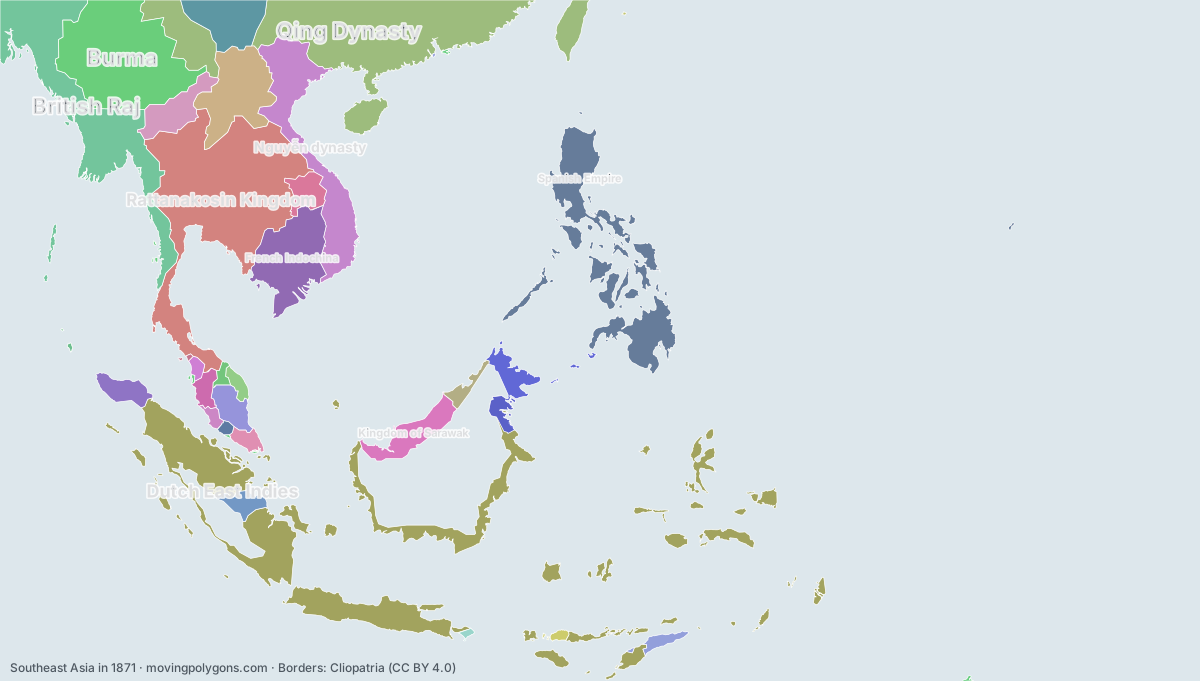
Southeast Asia in 1871
1871 is the year Germany was unified. This map shows the 31 states and peoples the data has for Southeast Asia in that year.
Watch these borders move
Play the changes on an animated map, in your browser. Free, no account needed.
States and peoples in Southeast Asia in 1871
Largest first, by area on this map.
- Dutch East Indies
- Qing Dynasty
- Rattanakosin Kingdom
- British Raj
- Burma
- Spanish Empire
- Nguyễn dynasty
- French Indochina
- Kingdom of Luang Phrabang
- Panthay Rebellion
- Kingdom of Sarawak
- Chiangmai
- Sultanate of Sulu
- Pahang Sultanate
- Kingdom of Champasak
- Sultanate of Aceh
- Sultanate of Jambi
- Sultanate of Perak
- Sultanate of Johor
- Sultanate of Brunei
- Portuguese Colonies
- Sultanate of Terengganu
- Sultanate of Selangor
- Sultanate of Kedah
- Kelantan
- Sultanate of Bima
- Negeri Sembilan
- British Colonial Empire
- Bali
- Kedah-Perlis District
- Empire of Japan
New on the map since 1846
British Raj · French Indochina · Panthay Rebellion · Pahang Sultanate · Empire of Japan
Gone from the map by 1896
Dutch East Indies · Burma · Spanish Empire · Nguyễn dynasty · Kingdom of Luang Phrabang · Panthay Rebellion · Kingdom of Sarawak · Chiangmai · Sultanate of Sulu · Pahang Sultanate · Kingdom of Champasak · Sultanate of Perak · Sultanate of Johor · Sultanate of Brunei · Sultanate of Selangor · Sultanate of Bima · Negeri Sembilan
Animated maps of this time
Southeast Asia in other years
Other regions in 1871
The outlines are coarse and follow the Cliopatria dataset: borders before modern surveys are estimates, and a blank area means the data has no state on record there, not that nobody lived there. A state that changed hands during the year can appear together with its successor.